REFER A FRIEND: GIVE $50, GET $50



One-Sided Facial Swelling: See an Emergency Dental Specialist Now

Waking up with a swollen face on just one side is stress-inducing. It can feel tender, look puffy, and make simple things like chewing or talking uncomfortable. Most people assume it will go away on its own. But the tension shoots up when it doesn’t. The underlying cause behind such a condition often has more to do with your teeth and gums than you might expect.
Common Dental Causes of One-Sided Facial Swelling
When swelling appears on just one side of your face, there are numerous aspects that can go wrong. But the most common ones are:
Dental Abscess
A dental abscess is a pocket of infection that forms either at the root of a tooth or in the surrounding gum tissue. It’s one of the most frequent causes of sudden, one-sided facial swelling. The infection can spread rapidly from the tooth to the jaw, neck, and beyond if left untreated.
Signs of a dental abscess include:
- Throbbing, persistent pain in one tooth or jaw
- Swelling that feels warm or tender to the touch
- Fever or a general feeling of being unwell
- A bad taste in your mouth from draining pus
- Pain that worsens when lying down
If you’re experiencing any combination of these, reaching out to an emergency dentist in The Woodlands should be your next step. At The Woodlands Dentistry and Orthodontics, emergency appointments are available to address infections before they escalate.
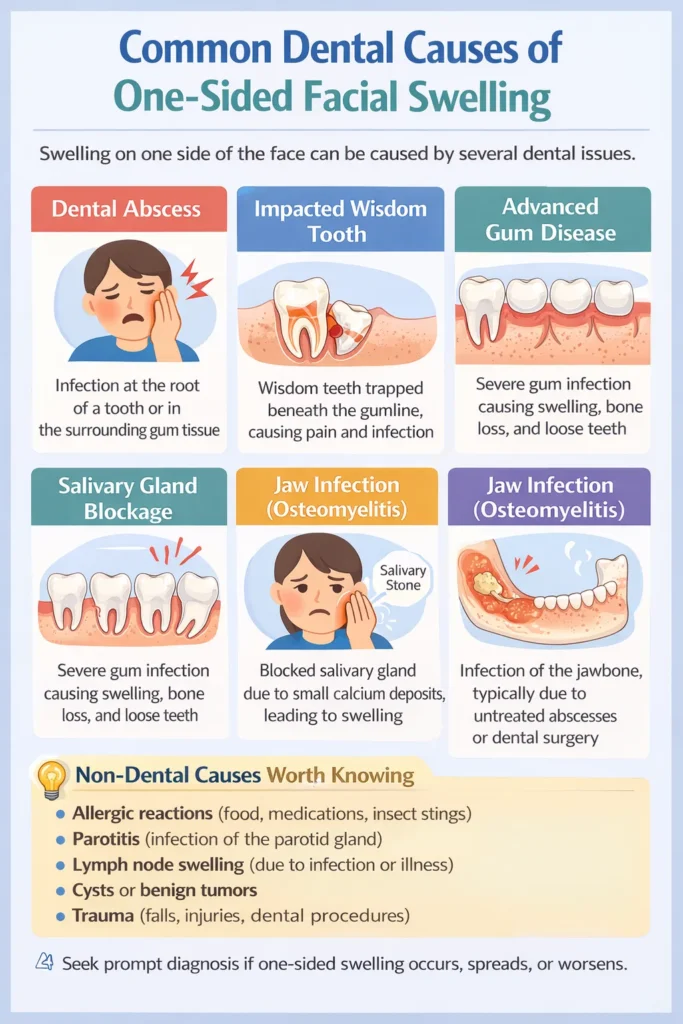
Impacted Wisdom Tooth
Wisdom teeth that don’t fully erupt can become trapped beneath the gumline – a condition known as impaction. Impacted wisdom teeth often cause swelling, jaw stiffness, and pain in the back of the mouth. The swelling develops gradually, then flares up when the area becomes infected.
Because wisdom teeth sit at the far corners of the mouth, they’re prone to bacterial buildup and inflammation. This kind of infection can cause swelling of the jaw and cheek on one side within hours.
Gum Disease at an Advanced Stage
Early gum disease, or gingivitis, causes redness and bleeding. When it progresses to periodontitis, the infection moves deeper into the bone supporting your teeth. At this advanced stage, swelling along one side of the face or jaw is not uncommon.
Salivary Gland Blockage
Located on the sides of your face and under your jaw, salivary glands can become blocked by small calcium deposits called sialoliths (salivary stones). When a gland is blocked, saliva backs up, and the gland swells. The swelling appears below the jaw or in front of the ear, and it may worsen around mealtimes when saliva production increases.
Jaw Infection (Osteomyelitis)
Though less common, a jawbone infection can cause significant swelling on one side of the face. This type of infection is usually secondary to a dental procedure, tooth extraction, or an untreated abscess. It requires prompt diagnosis and treatment.
Non-Dental Causes Worth Knowing
Not every case of facial swelling originates from a tooth or gum issue. Other possible causes include:
- Allergic reactions – contact dermatitis or reactions to food, medications, or insect stings
- Parotitis – inflammation or infection of the parotid gland
- Lymph node swelling – often a response to nearby infection or illness
- Cysts or benign tumors – rare, but capable of causing slow, progressive swelling
- Trauma – a fall, injury, or dental procedure
If you’re unsure whether the swelling is due to your dental issue, it’s advisable to get evaluated promptly. Swelling that spreads, makes breathing or swallowing difficult, or is accompanied by fever, necessitates immediate emergency care.
When Facial Swelling Becomes a Dental Emergency
Facial swelling doesn’t always mean an emergency, but several signs indicate you should not wait for a routine appointment.
Seek immediate dental care if:
- The swelling is spreading to your neck or throat
- You’re struggling to breathe or swallow
- You have a high fever alongside the swelling
- The area feels hard, and the pain is severe
- You’ve had a dental procedure recently, and swelling is worsening
An emergency dentist can assess the cause, drain the infection if needed, prescribe antibiotics, and create a clear plan for definitive treatment. Waiting can allow an oral infection to become life-threatening – Ludwig’s angina, a severe spread of dental infection to the floor of the mouth, is a medical emergency that begins with what often looks like simple jaw swelling.
How Dental Swelling Is Treated
Treatment depends on the cause of the swelling. Here’s a breakdown:
- Abscess: The dentist will drain the abscess to relieve pressure and pain. Depending on how severe it is, a root canal may be performed to save the tooth, or the tooth may need to be extracted. Antibiotics are typically prescribed to clear the infection.
- Impacted wisdom tooth: If the tooth is causing recurrent infections or hasn’t fully erupted safely, extraction is usually recommended. The procedure is straightforward and performed under local anesthesia.
- Advanced gum disease: Deep-cleaning procedures, such as scaling and root planing, remove the bacteria and deposits that drive the infection. In severe cases, surgical intervention may be needed.
- Salivary gland blockage: Many salivary stones can be gently massaged out or removed with minor procedures. If the gland is infected, antibiotics and hydration are part of the treatment plan.
What You Can Do Before Your Appointment
If you’ve noticed facial swelling and are waiting to be seen, a few things can help manage discomfort in the meantime:
- Apply a cold compress to the outside of your cheek for 15–20 minutes at a time to reduce swelling
- Stay upright – lying flat can worsen swelling and pressure
- Take over-the-counter pain relievers as directed on the label
- Avoid pressing or squeezing the swollen area
- Stay hydrated and stick to soft foods
These steps won’t treat the underlying issue, but they can provide temporary relief while you arrange care. Do not ignore swelling that worsens or spreads – that’s a sign the infection is progressing.
Getting Care at The Woodlands Dentistry and Orthodontics
If you’re in The Woodlands and experiencing unilateral facial swelling, The Woodlands Dentistry and Orthodontics offers emergency dental services with the attention and urgency these situations require. The team understands how distressing and painful oral infections can be, and they’re equipped to diagnose the cause and relieve your discomfort as quickly as possible.
Don’t wait to see if the swelling goes away on its own. If it’s connected to a dental issue, it won’t resolve without treatment, and the longer it’s left, the more complex and uncomfortable it can become.
Contact The Woodlands Dentistry and Orthodontics team today to schedule your emergency appointment.
People Also Ask
Can a tooth infection spread to other parts of the body?
Yes. Untreated dental infections can spread to the jaw, neck, chest, and bloodstream. This is rare but serious. Symptoms such as swelling around your throat, fever, or difficulty swallowing after a dental infection require immediate medical attention.
Is one-sided facial swelling always a sign of infection?
Not always. Trauma, allergic reactions, cysts, and salivary gland issues can also cause swelling on one side. However, dental infections are among the most common causes, so a dental evaluation is a smart first step when the cause is unclear.
How long does swelling from a dental abscess last?
With treatment including drainage, antibiotics, and definitive care, swelling begins to subside within 24 to 48 hours. Without treatment, it tends to worsen and can spread.
Can I treat facial swelling from a tooth problem at home?
Home remedies like cold compresses and pain relievers can temporarily reduce discomfort, but they won’t resolve the underlying infection. A dental abscess or impacted tooth requires professional treatment to heal properly.