REFER A FRIEND: GIVE $50, GET $50



Tooth Extractions: Pain, Healing & What Comes Next

The word “extraction” makes a lot of people tense up. Dental anxiety is one of the most common reasons people delay care they genuinely need, and tooth removal sits near the top of the list of procedures people dread most. But the fear is often much bigger than the reality, and most patients say the same thing afterward: “That wasn’t nearly as bad as I expected.”
This isn’t a piece that downplays your concerns. Instead, it walks you through exactly what happens during a tooth extraction, what to expect in terms of pain and recovery, and what separates a smooth healing process from a complicated one. If you’ve been putting off a necessary extraction, the information below might change how you look at it.
Why a Tooth Extraction Might Be Necessary
Dentists don’t recommend removing a tooth unless it’s the right call. Preservation is always the first priority. But there are situations where extraction is genuinely the best path forward for your oral health.
Common reasons include severe decay that has destroyed too much of the tooth structure to save, advanced gum disease that has weakened the bone holding a tooth in place, a cracked tooth where the fracture extends below the gumline, or overcrowding that’s affecting your bite or creating obstacles for orthodontic treatment. Impacted wisdom teeth are another frequent reason for removal. For patients in Montgomery County, tooth extractions in The Woodlands at The Woodlands Dentistry and Orthodontics are handled with a focus on comfort and clarity, so you know exactly what’s happening and why before anything begins.
What the Procedure Feels Like
The biggest misconception about tooth extraction is that it’s painful. It doesn’t have to be. Modern local anesthesia is highly effective, and your dentist won’t proceed until the area is completely numb. What you’ll feel during the procedure is pressure and movement. If at any point you do feel something sharp, you can let your dentist know, and more anesthetic can be administered.
The steps, in plain terms
First, your dentist will apply a topical numbing gel to the gum before injecting the local anesthetic. The injection itself is brief, and the numbing effect kicks in within a few minutes. From there, your dentist will loosen the tooth using a tool called an elevator, then remove it with forceps. For simple extractions, the entire process usually takes less than 20 minutes.
Surgical extractions, used for impacted or broken teeth, involve a small incision in the gum and sometimes require sectioning the tooth into pieces for easier removal. These take a bit longer, but the anesthesia keeps you comfortable throughout. Sedation options are also available for patients with significant anxiety.
What about after the numbing wears off?
This is the part people are most anxious about, and rightfully so. Once the anesthetic fades, typically a few hours after the procedure, you’ll feel some soreness in the extraction area. This is normal and expected. For most simple extractions, over-the-counter pain relievers like ibuprofen manage it well. Your dentist may prescribe something stronger for more complex cases or if you have a lower pain threshold.
The first 24 to 48 hours tend to be the most uncomfortable. By day three, the soreness usually diminishes noticeably, and most patients feel close to normal within a week.
Healing: What’s Normal and What’s Not
Your body does most of the work after an extraction. A blood clot forms in the socket, protecting the bone and nerves underneath while the tissue heals. Protecting that clot is the most important thing you can do in the first few days.
What supports a smooth recovery
- Bite gently on gauze for 30–45 minutes immediately after the procedure to help the clot form
- Avoid using a straw, smoking, or spitting forcefully for at least 48 hours
- Stick to soft foods like yogurt, mashed potatoes, eggs, and soup for the first few days
- Keep your head slightly elevated when resting to reduce swelling
- Rinse gently with warm salt water starting the day after the extraction
Signs that warrant a call to your dental Specialist
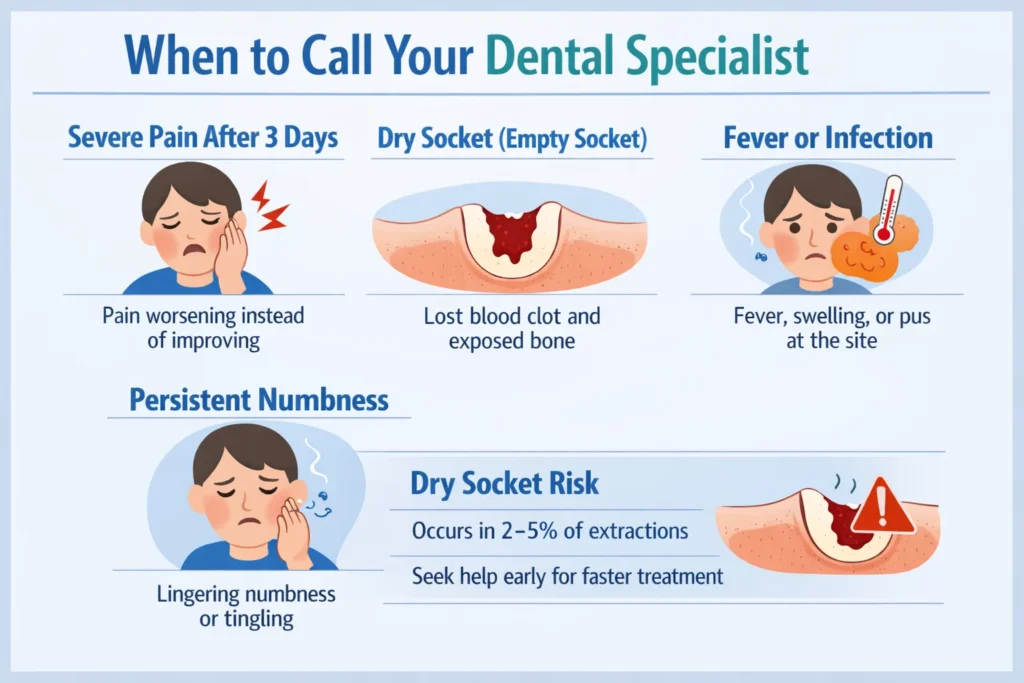
Mild swelling, some bruising, and tenderness are all part of normal healing. However, if you notice any of the following, reach out to your dental office:
- Severe pain that gets worse after the third day rather than improving
- A dry, empty-feeling socket occurs when the clot dislodges
- Fever, significant swelling that spreads, or pus at the extraction site
- Numbness or tingling that persists beyond a day or two
Dry socket is the most common complication after an extraction, affecting roughly 2 to 5 percent of cases according to published dental literature. It’s treatable, but catching it early makes a difference.
What to Expect at Your Appointment
Patients at The Woodlands Dentistry and Orthodontics go through a thorough exam and X-ray evaluation before any extraction is scheduled. This helps the team understand the tooth’s position, the condition of the surrounding bone, and whether a simple or surgical approach is appropriate. Nothing happens without your full understanding and consent.
Don’t let worry keep you in discomfort longer than necessary. Schedule a consultation at Woodlands Dentistry & Orthodontics in The Woodlands, TX. The team will walk you through your options honestly, address every concern you have, and make sure you feel prepared before any procedure begins.
People Also Ask
How long does it take to fully recover from a tooth extraction?
Most patients recover from a simple extraction within 7 to 10 days. The gum tissue closes over the socket during that time. Full bone healing in the extraction site can take several months, though you won’t feel that process. Surgical extractions, such as wisdom tooth removal, may require 2 to 3 weeks for soft-tissue healing.
Can you eat normally after a tooth extraction?
Not right away. For the first 24 hours, stick to soft, cool foods and avoid anything hot, crunchy, or chewy. After two to three days, you can gradually reintroduce firmer foods as comfort allows. Avoid chewing on the extraction side until the area has healed enough to tolerate pressure without discomfort.
Is it possible to have a tooth extracted and replaced the same day?
In some cases, yes. Same-day implant placement (called immediate implant placement) is possible when the bone at the extraction site is healthy and sufficient. Not everyone qualifies, though. Your dentist will evaluate the site after extraction to determine whether immediate placement is appropriate or whether a healing period is needed first.
What happens if you don’t replace a missing tooth after extraction?
Leaving a gap unfilled can have consequences over time. Adjacent teeth may shift toward the empty space, which can affect your bite alignment. The jawbone beneath a missing tooth also gradually loses density without the stimulation a tooth root provides — a process called bone resorption. Replacing the tooth with an implant, bridge, or partial denture preserves the surrounding structure.