REFER A FRIEND: GIVE $50, GET $50



Dr. Jonathan Phan’s Insights on Full Mouth Implants For The Woodlands Residents
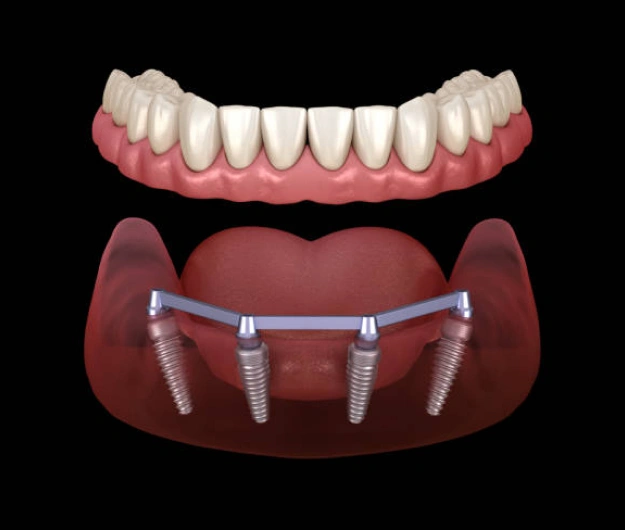
Missing teeth are more than a cosmetic issue. Chewing strength, bone density, and general function can all be compromised. As per the ADA, failing to replace missing teeth can lead to jawbone recession over time. It’s no wonder so many patients are considering long-term, stable tooth replacement options over traditional removable dentures.
Here, you’ll get clear, evidence-based information from Dr. Jonathan Phan on full-arch implant options in our area, so you can make the right choice with confidence and without confusion.
Understanding Full-Arch Implant Treatment
This procedure replaces a full set of upper or lower teeth using dental implants strategically placed in the jawbone. Rather than adhesives or removable dentures, dental implants create a firm anchor directly into the jaw.
This is what helps preserve your bone density, which can deteriorate after tooth loss when the jawbone no longer receives stimulation, according to the CDC.
Full mouth implants in The Woodlands are ideal for those who:
- Are missing multiple teeth
- Are unhappy with dentures that slide around and create problems
- Have significant decay or advanced gum disease
- Desire a fixed, stable tooth replacement
Unlike removable dentures, implant-supported restorations stay fixed during eating and speech. It’s this stable connection that attracts so many patients.
What Dr. Jonathan Phan Emphasizes About This Treatment
Three primary points dominate Dr. Phan’s approach: evaluation, placement, and long-term health.
1. Evaluation is key
There is a required period before implants can be placed. Your assessment will include:
- Digital imaging
- An examination of your bone density
- Assessment of your gum health
- A thorough medical history
If there’s not enough bone to place the implants, procedures like bone grafting will be discussed.
2. Implant Placement is Precise
Generally, four to six implants will be placed per arch. These will act as anchors for your new, fixed set of teeth, strategically placed to ensure even distribution of biting forces.
3. Healing and Integration are Crucial
Once in place, your dental implants will fuse with your jawbone. This osseointegration, according to the NIH, makes implants stable in the long term by creating a biological bond between the implant and the bone.
The amount of healing time will vary depending on your personal case. Some procedures allow same-day placement of temporaries, while others require a more gradual approach.
Why Residents of The Woodlands are Interested
The Woodlands has a high-energy demographic. Whether you’re on the walking trails at Northshore Park or dining out on The Waterway, function and confidence are critical.
Patients typically report struggles with:
- Eating certain hard foods
- Denture discomfort and sliding
- Constant sore spots and irritation
- Poor biting strength
All of these issues are resolved by full-arch implant treatment, which not only restores function but also maintains jawbone health and youthful facial contours.
What To Expect From The Procedure
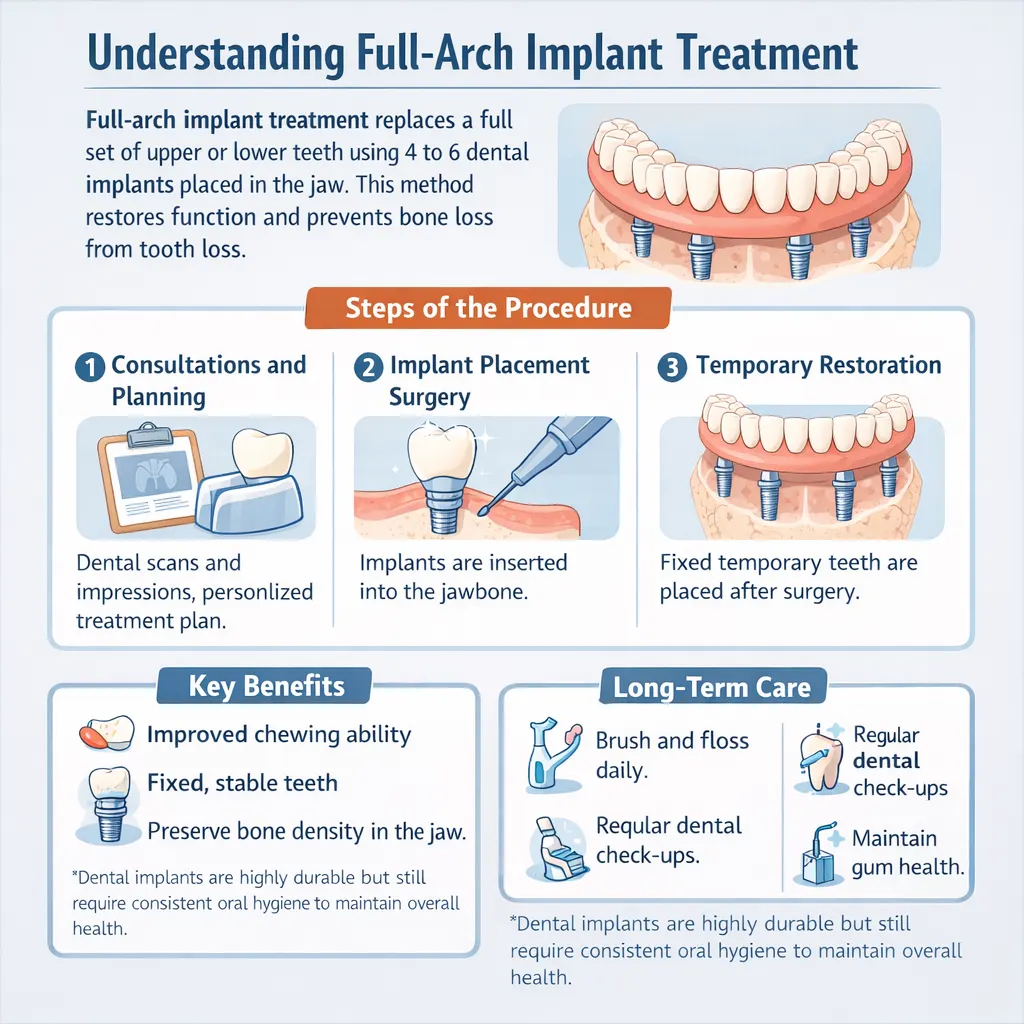
Although every case will be unique, the procedure for full arch implants consists of the following steps:
Step 1: Consultations and Treatment Planning
Dental impressions and scans are taken. The dentist develops a personalized care plan.
Step 2: Dental Implant Placement Surgery
The dental implants are carefully inserted into the jawbone in a surgically sterile environment.
Step 3: Placement of the Temporary Prosthetic Restoration
In many cases, a fixed set of temporary teeth is cemented onto the implants during the healing process.
Step 4: Placing the Definitive Prosthetic Restoration
Once the implants have integrated with the jawbone, the final restoration is attached to the abutments.
The treatment can be considered alongside other restorative options, such as porcelain crowns or orthodontic solutions like Invisalign, in long-term treatment planning. However, full-arch implants were developed for patients with complete tooth loss.
Clinical Benefits to Consider
Peer-reviewed studies provide extensive evidence for many advantages of this type of restoration:
- Improved chewing ability
- Increased stability versus removable prosthetics
- Bone preservation
- High longevity and durability when maintained correctly.
The dental implants themselves do not decay, but the surrounding gums do need to be monitored at professional cleaning and checkup appointments.
Maintenance Requirements and Long-term Care
Full-mouth implants in The Woodlands require regular dental cleanings, just as natural teeth do. Patients should expect the following regimen:
- Brushing twice a day
- Flossing, or utilizing a waterpik, once a day
- Professional cleaning at regular visits
Patients previously experiencing periodontal disease should continue with a regimen of stringent periodontal treatment.
Success with any form of implant-supported restoration, however, depends on the patient’s diligent maintenance.
Who May Not Be an Immediate Candidate?
While not absolute contraindications, uncontrolled diabetes, present gum infection, heavy smoking, and significant uncorrected bone loss may lead to increased risk factors, and careful treatment planning is required. These patients would not necessarily be excluded from receiving implants, but they might require preoperative and additional maintenance steps.
If you are unsure whether this treatment is right for you, contact your dentist for a complete assessment.
Realistic Expectations
Full-arch implants are a highly sophisticated treatment with long-term objectives. They are not considered a purely aesthetic quick fix but a complex clinical procedure that will address overall function.
Patient considerations include:
- The required healing period
- The number of necessary follow-up visits
- There is a continuous requirement for diligent oral hygiene.
When properly placed and maintained, full-arch implant restoration can last many years.
Informed Decision-Making
Restorative dental treatment is highly personalized and varies from case to case based on oral health status, existing medical conditions, and personal preferences.
Dr. Jonathan Phan advises patients to ask questions such as:
- What are my alternatives?
- What will be the length of the procedure?
- What do I need to do to maintain the restored teeth?
- What are the risks involved?
This type of discussion ensures that the patients understand their treatment plan thoroughly and that there is mutual understanding of the treatment to come.
A New Path Towards Stability
If you are experiencing tooth loss and seeking a comprehensive solution to improve function and stability, full-arch implants offer a structured, stable option.
Those interested in advanced restorative options in The Woodlands area may wish to contact The Woodlands Dentistry and Orthodontics and speak with Dr. Jonathan Phan. Patients who wish to understand their full mouth implants in The Woodlands and ask questions about the procedure and outcome are encouraged to contact our team to schedule an assessment appointment.
Common Questions People Ask
How long does full-arch implant treatment take?
Treatment time varies. Some patients receive temporary teeth on the same day, but full healing and placement of the final restoration may take several months.
Is the procedure painful?
Implant placement is performed under controlled anesthesia. Most patients report manageable post-procedure discomfort, similar to that of other minor oral surgeries.
How long do full-arch implants last?
With proper care and regular checkups, implants can last many years. Longevity depends on hygiene and overall health.
Are implants better than dentures?
Implants provide fixed stability and bone support. Dentures are removable. The right choice depends on individual needs.