REFER A FRIEND: GIVE $50, GET $50



A Local Guide to Teeth Whitening for The Woodlands Residents

It’s not always a hygiene problem! Our teeth can change color for a variety of reasons, including aging, diet, medications, and genetics. If you live near Market Street, Hughes Landing, or Alden Bridge, you are likely debating whether it is worth the cost to switch from an over-the-counter solution to a visit to a dentist’s office. This guide covers the difference, how it works, the safety factors approved by the ADA, and gives you what you need to know fast and easy.
Understanding Tooth Discoloration
Teeth change color for different reasons. Here’s a breakdown of tooth discoloration into three categories:
- Extrinsic stains- These are on the outside of your teeth, and come from things like coffee, tea, wine, tobacco, and other foods.
- Intrinsic stains- These are when your teeth are stained on the inside. Tooth trauma can cause this, as can certain medications or the aging process.
- Age-Related staining- Your enamel wears away over the years, allowing more of the yellow dentin to show through.
In the second group of teeth care, many residents consider professional teeth whitening in The Woodlands when just basic brushing or whitening toothpastes can’t remove surface stains. A higher concentration of the peroxide-based teeth-whitening solution is used, which breaks down stain molecules within the enamel; it’s not abrasion!
Important: Teeth whitening doesn’t change the color of crowns, veneers, or fillings. If you have dental work, talk to your dentist before you begin the whitening process.
Types of Teeth Whitening
Most residents will choose one of three teeth whitening methods:
1. In-Office Professional Whitening
Done at a dental office. This uses a higher concentration of teeth-whitening solution, with a dental assistant taking care not to let it stain your gums.
Benefits:
- Gets you visibly whiter in one treatment.
- Can be monitored throughout.
- Reduces the likelihood of uneven results.
2. Custom Take-Home Trays
Provided by a dental office, these custom-molded trays will fit the contours of your mouth. You’ll then apply a teeth whitening solution for several days.
Benefits:
- Gradual and more natural results.
- Even teeth whitening application.
- Flexible timing.
3. Over-the-Counter Products
Whitening strips, pens, and toothpastes are the most affordable options and are widely available.
Limitations:
- Lowest concentration of peroxide.
- Slowest results.
- May be uneven.
The CDC emphasizes oral health care as an ongoing endeavor, a prerequisite for whitening. Untreated cavities or inflammation must be addressed before beginning a cosmetic treatment such as whitening.
Whitening-Is It Safe?
In the hands of trained professionals or when using approved, at-home kits, tooth whitening is generally safe for most adults. According to the ADA, peroxide-based whiteners are safe to use when used as directed.
Side effects can include:
- Temporary tooth sensitivity
- Mild gingival irritation
These typically subside within days, but if you already suffer from prolonged tooth sensitivity, let your dentist know. They can offer lower concentrations of whitening agents or a desensitizing gel to help.
Whitening is not safe for:
- Pregnant or breastfeeding women
- Children under the age of 16
- Those with pre-existing gum disease
Pain during or after the process means you should contact your dentist immediately. Remember that the information contained herein is purely educational and cannot be used as a substitute for professional dental advice.
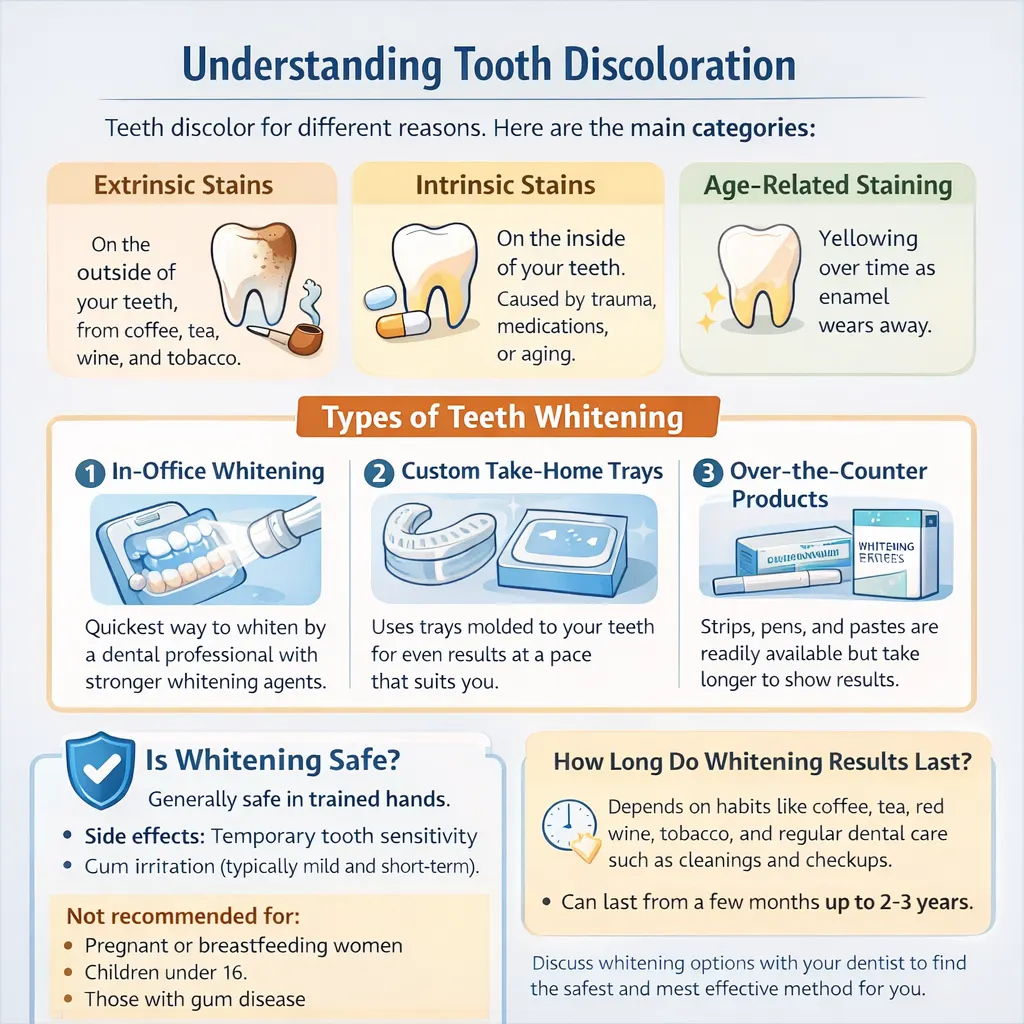
How Long Will Whitening Results Last?
The duration of a whiter smile depends on an individual’s lifestyle and oral habits.
Factors affecting the results include:
- Coffee or tea consumption
- Red wine intake
- Smoking or chewing tobacco products
- Irregular professional cleanings
With proper care, professional bleaching can last from several months to two years. Frequent touch-ups with home kits will help to maintain whiteness. It’s also important to remember that standard practices such as routine dental cleanings, restorative care for dental repairs, and orthodontics like Invisalign can enhance your smile alongside teeth whitening in The Woodlands.
What to Expect When Whitening Your Teeth
Your dental professional will first examine your teeth and gums to:
- Note any restorations that are already in your teeth
- Discuss what you’re trying to achieve
During treatment:
- The dentist will protect the gums surrounding your teeth.
- They will then apply the whitening solution.
- A dental light sometimes activates the solution.
After treatment:
- Avoid staining foods for the first 24 to 48 hours.
- Use a soft toothbrush.
- Attend regular dental checkups.
The residents who love attending summer outdoor events at The Cynthia Woods Mitchell Pavilion or who frequent the restaurants and bistros around Waterway Square on weekends will want to know when they can return to normal life. Most patients can return to their normal lives almost immediately, though it’s generally recommended to avoid staining foods or drinks for the first few days.
Myths of Teeth Whitening
Myth 1: Bleaching damages the tooth enamel.
Fact: Studies show that correctly supervised peroxide treatments are not detrimental to the tooth enamel.
Myth 2: Whitening toothpastes provide the same level of service as professional whitening treatments.
Fact: The most whitening toothpastes are only effective at removing surface stains.
Myth 3: Tooth whitening is permanent.
Fact: To maintain whitened teeth, touch-ups are needed, particularly in those with lifestyle habits known to cause staining.
When Whitening Alone Isn’t Sufficient
If your discoloration is intrinsic or structural, whitening may not provide the desired results. Alternative options include:
- Porcelain veneers
- Dental bonding
- Crowns
If teeth do not reach the desired whiteness, the cosmetic or restorative options listed above may be considered.
Make The Right Choice For Your Oral Health
If discoloration is becoming an issue, professionally monitored, safe teeth whitening in The Woodlands is a viable option. You must go through the correct evaluation, have an understanding of what the result will be, and ensure that the teeth are healthy before commencing treatment. Professional help will help alleviate and avoid post-whitening sensitivities and uneven results. Knowing the reason for staining will help avoid complex treatments; just one way to be smarter about your oral health.
Eager To Learn More?
If you would like an assessment to determine if whitening or another cosmetic treatment is the best choice for your oral health, The Woodlands Dentistry and Orthodontics would be happy to assist you. Call our office to schedule a consultation and find out more.
Common Questions People Have
How long does professional whitening take?
In-office treatments usually take about 60–90 minutes. Take-home systems may require daily use for one to two weeks. Results vary depending on the level of staining and individual enamel response.
Will whitening make my teeth sensitive?
Some people experience temporary sensitivity. This typically resolves within a few days. Using desensitizing toothpaste before and after treatment may help reduce discomfort.
Can I whiten crowns or fillings?
No. Whitening agents do not change the color of restorations. If you have visible crowns or bonding, discuss cosmetic planning with your dentist beforehand.
Is whitening covered by insurance?
Most dental insurance plans consider whitening a cosmetic procedure and do not cover it. Check with your provider for specific policy details.